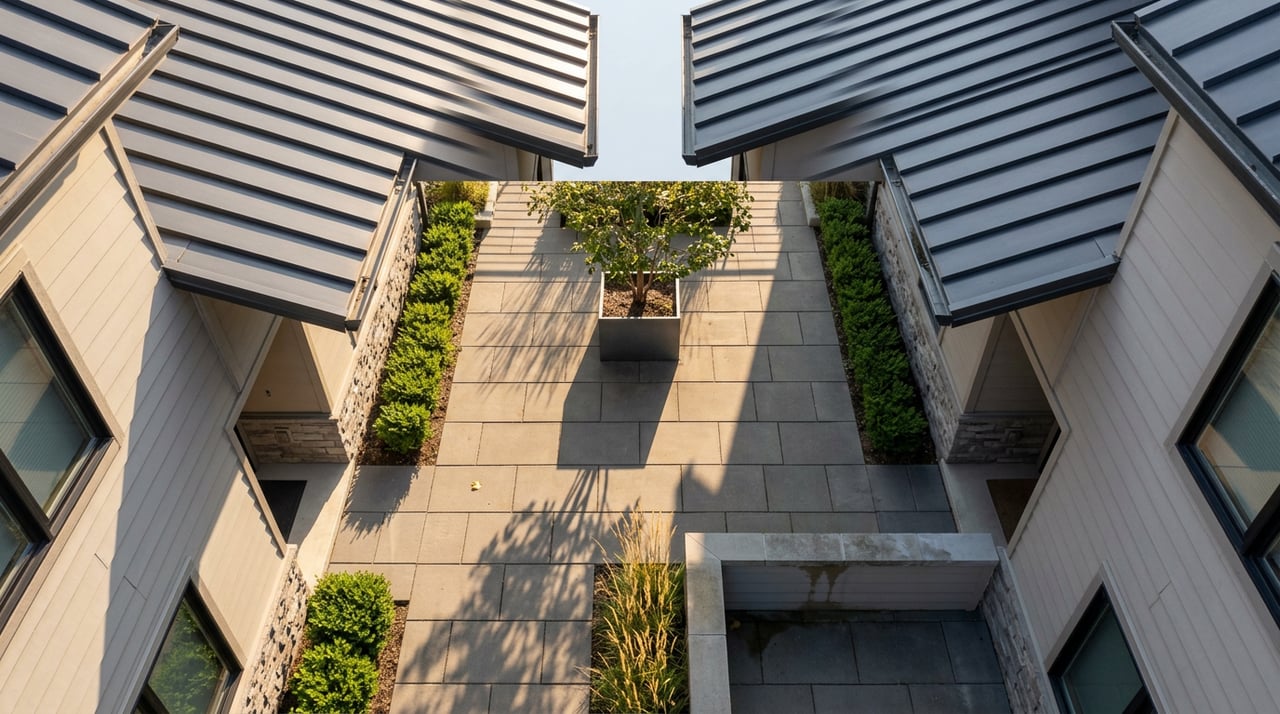
Drive along U.S. 36 through Westminster right now and you'll see a construction crane parked over a partially finished neighborhood that used to be a mall parking lot. A new park opened. A shipping-container bar just opened. Somewhere behind the fencing, condos that were supposed to break ground last summer are at some stage of being built. None of it looks like the renderings yet. The district is still taking shape.
The difference between what is built today and what remains planned is one factor to consider when comparing a Downtown Westminster address with an established Westminster block nearby. Colorado's urban renewal financing is part of the district's development context.
A Downtown Seventeen Years in the Making
The City of Westminster started buying pieces of the old Westminster Mall in 2009. By 2012 the city owned most of it, and by then the mall's original buildings, including its landmark hot air balloon décor, were already coming down. What's risen in their place since is what the city now calls Downtown Westminster, on land the city itself owns and is developing rather than leaving to a single private buyer.
The pace since then has been steady but slow enough that city staff talk about it in decades, not quarters. Westminster's Real Estate Development Manager, Heather Cronenberg, has described the whole effort as something closer to a "300-year project" than a standard development timeline, as reported by the Denver Gazette.
What's landed in 2026 specifically: Blossom Commons, a $26 million affordable housing project from Volker Development, broke ground on April 14. A new central park, later named Aerostat Park through a public vote that drew more than 1,600 ballots, held its grand opening on May 30. Townhomes have been under construction, and condos that were expected to break ground around the middle of last year are somewhere in that process now, though the city hasn't published a firm delivery date for them.
How Urban Renewal Financing Works
Here's the part that actually changes how you should think about buying near this district. The Downtown Westminster site is designated an urban renewal area, which means the Westminster Economic Development Authority, not the city's general fund, captures the additional property tax revenue that the redevelopment generates as values rise. That captured revenue gets reinvested back into the district itself, funding more of the parks, streets and public space that make the area valuable in the first place, as reported by the Denver Gazette in its look at the project.
That structure isn't unusual for redevelopment districts. For buyers, the authority's construction schedule and planned amenities are relevant context when considering how the district may change.
That's a different risk profile than buying in a neighborhood where the park, the retail corridor and the school assignment are already settled facts. In the Denver Gazette's reporting, an associate broker with Colorado Real Estate Brokers described a general pattern this way:
"Development is always twice as long and twice as expensive as everyone thinks."
He wasn't talking about Downtown Westminster specifically failing. He was describing the normal physics of large redevelopment projects, the same physics that turned a mall demolition that started in 2011 into a downtown that's still adding pieces fifteen years later.
What's Open Now and What's Still Planned
If you're pricing a home near this corridor today, it helps to separate what you can walk to this month from what's still on a construction schedule.
Live and operating as of this year:
- Aerostat Park, the new central park, which had its grand opening celebration on May 30
- Kokopelli Social Bar, a container-bar addition near 90th Avenue and Fenton Street serving beer from the local Kokopelli Beer Company
- A Smart eHub for e-bikes in the Eaton Street parking garage, offering secured, monitored bike parking
Still moving through construction or without a published completion date:
- Blossom Commons, the affordable housing project that broke ground in April
- The park's eastern-edge and southern-portion sections, which were slated to follow the main park's completion
- New ownership condos, which the city's own updates describe as "on the way" without a firm date
None of that is a criticism of the pace. Redeveloping a 100-acre former mall inside an existing city, with the city itself acting as developer, is genuinely different work than a private builder dropping model homes on raw land. The Downtown Westminster news page is a reasonable place to track what's actually opened versus what's still described as upcoming, and it updates more often than most portal listings bother to.
The Practical Read for Buyers Comparing Westminster Addresses
Citywide, Westminster's housing market has room to breathe right now. The median sale price sat around $535,000 as of April 2026, down slightly year over year, with homes typically taking about a month to sell rather than the two-day bidding wars of a few years back. That provides context for comparing prices in Downtown Westminster with prices elsewhere in Westminster.
A few resident voices captured in the Denver Gazette's reporting raised the pricing question directly. One walked through the district and summed up a common reaction: "You can get better deals." That's a fair instinct if you're comparing a Downtown unit's price against what an established Westminster or Wheat Ridge home offers today in finished square footage and yard space.
The tradeoff is that some amenities are available now while others remain planned, and timelines for individual pieces have shifted before. If that trade appeals to you, the questions worth asking before you make an offer are concrete ones: which phase is the specific building or block in, what's the district's own published timeline for the next amenity, and how does the current price compare to a similarly sized, similarly finished home in a neighborhood that isn't still under a crane.
None of this makes a Downtown Westminster purchase a bad idea. It makes it a different kind of purchase from one in a neighborhood with completed amenities, so it is worth considering which features are in place and which remain planned before making an offer.
A Few Direct Answers
Does buying in the urban renewal area change my property tax bill? What's different is where the incremental revenue generated by rising values in that specific district goes. Under the urban renewal structure, WEDA captures that increment and reinvests it in the district rather than it flowing straight to the city's general fund.
When will the rest of Downtown Westminster actually be finished? There's no single published completion date for the whole district. Individual pieces, like Aerostat Park's remaining sections or the planned condos, have their own timelines, and those have shifted before. Checking the city's own project updates before you write an offer is a better source than a listing description.
Is a home near Downtown Westminster a good investment right now? That depends on your time horizon and which amenities are already in place versus planned. If you're comparing it to an established Westminster neighborhood with completed amenities, consider the differences in finished square footage, price and timing, as well as proximity to planned features.
If you're weighing a Downtown Westminster address against an established block in Westminster, Wheat Ridge or one of the other West Denver suburbs, that's exactly the kind of comparison worth working through with someone who tracks these projects as they change. Call or email Audrey Michel to talk through what a specific address is actually buying you right now, not just what the rendering shows.
This article is general information, not legal, tax or financial advice. Consult a qualified professional about your situation.